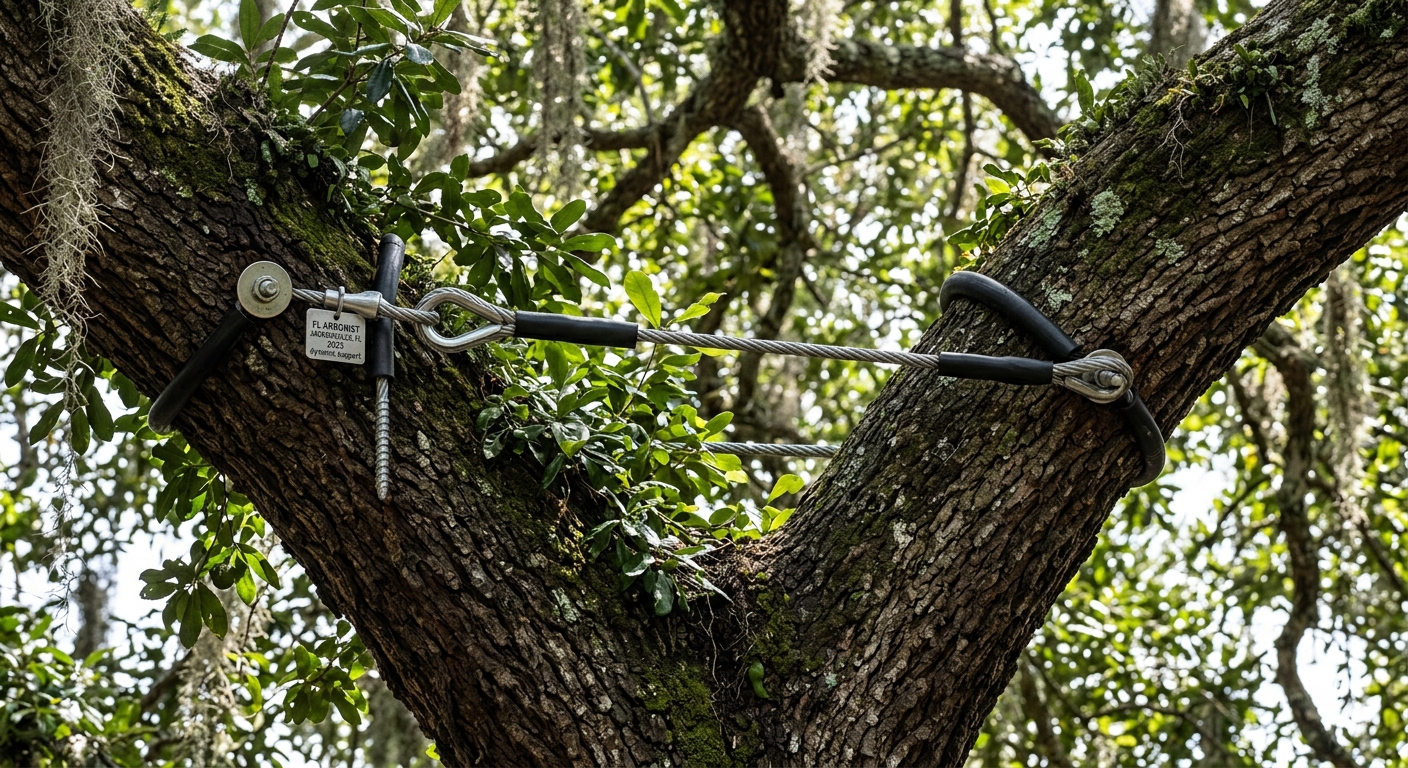
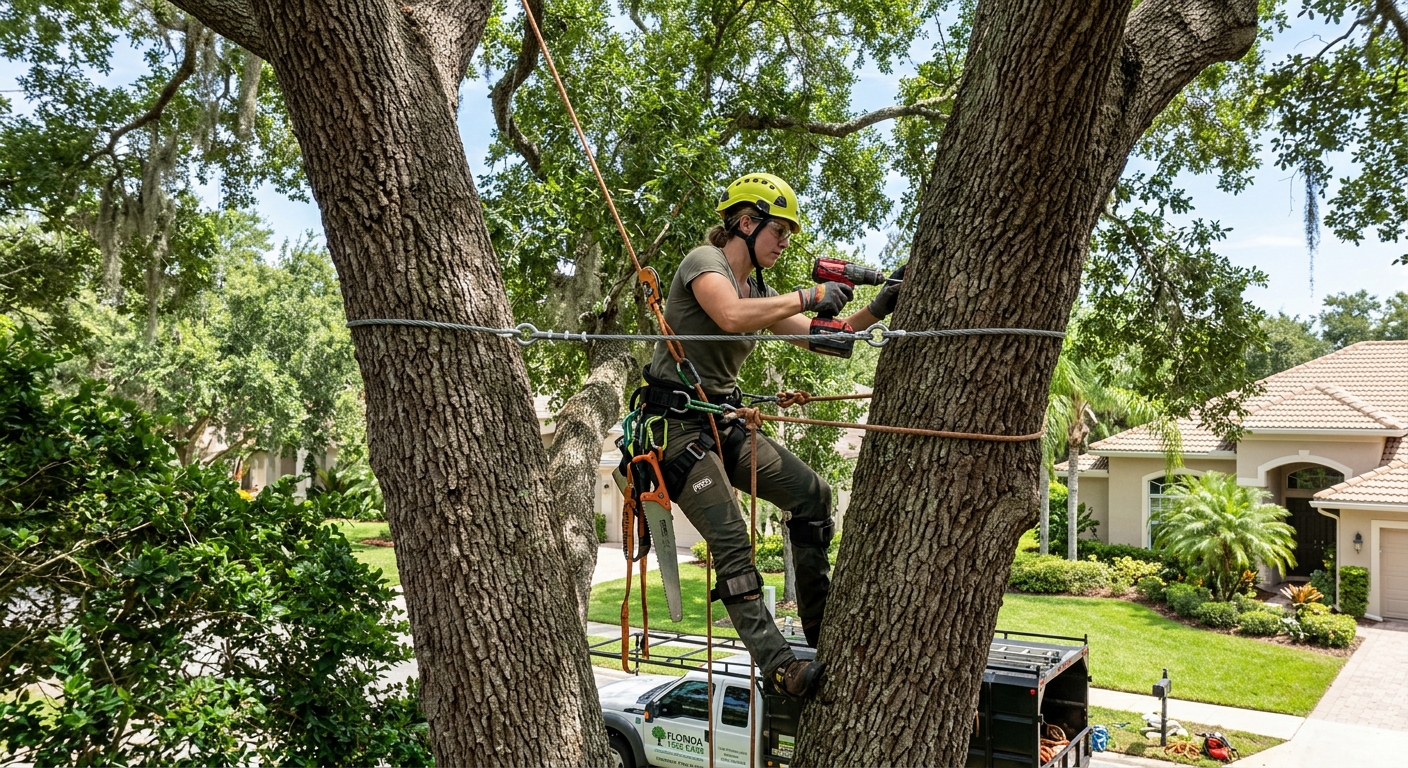
Tree cabling and bracing Jacksonville FL is a proven structural support system used by ISA-certified arborists to preserve valuable trees that have co-dominant stems, heavy lateral limbs, or storm damage that would otherwise require removal. By installing high-strength steel cables and threaded rod braces in the upper canopy, our arborists redistribute the mechanical stress that causes limb failure — protecting your property while keeping mature, established trees alive for decades longer. Jacksonville’s aging live oaks, laurel oaks, and ornamental trees throughout Riverside, San Marco, Ortega, and the barrier island communities are prime candidates for cabling work, and our certified team has the training to evaluate every tree individually and install the right system for its unique structure.
What Is Tree Cabling and Bracing?
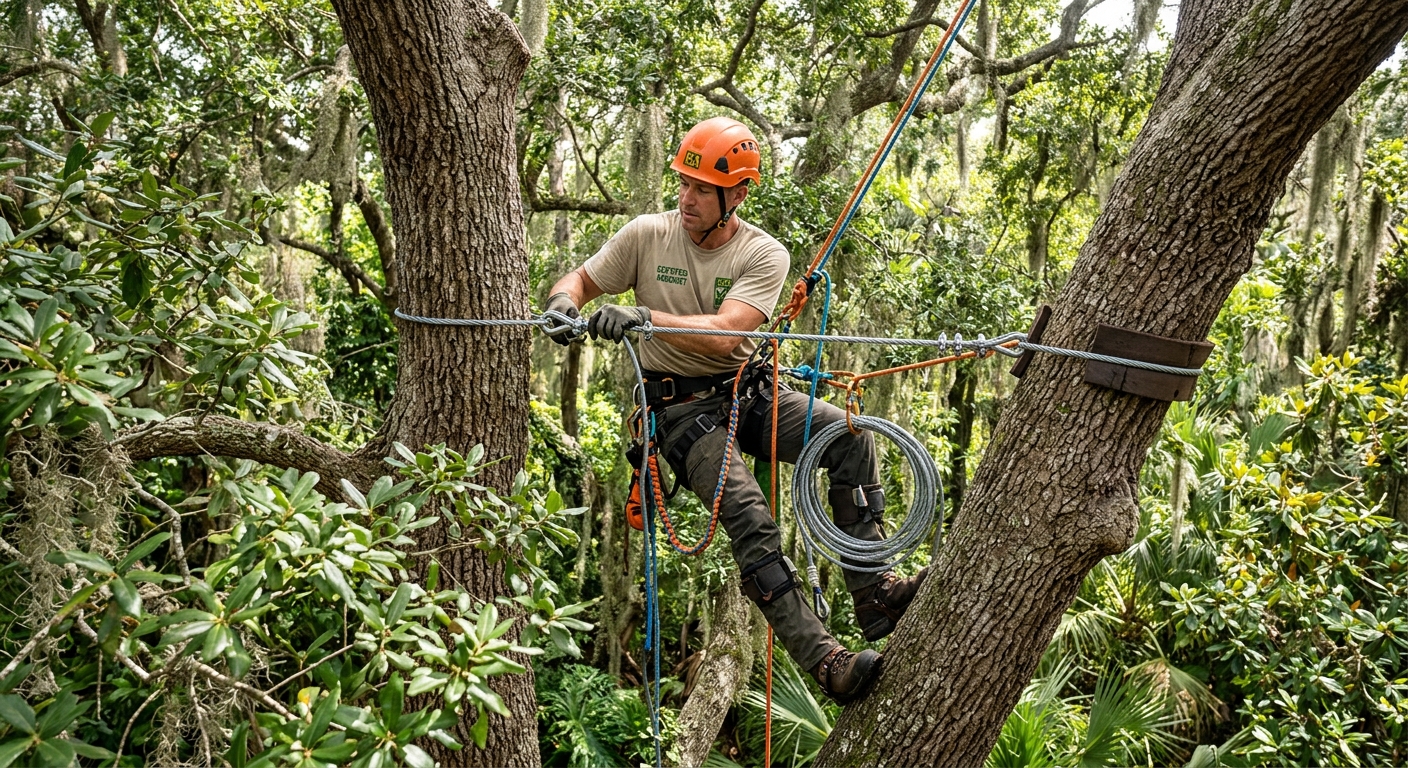
Tree cabling involves installing flexible steel cable systems high in the canopy between co-dominant stems or between a heavy lateral limb and the main trunk. These cables limit the range of movement during wind events, preventing the kind of catastrophic limb failure that sends a 2,000-pound branch through your roof during a Jacksonville thunderstorm. Bracing uses threaded steel rods inserted through cracks, splits, or weak attachment points in the trunk or major limbs to hold the tree together structurally.
When Is Tree Cabling Recommended?
Our ISA-certified arborists recommend tree cabling and bracing when a tree has high value to the property, when the tree shows specific structural vulnerabilities like included bark in a V-crotch union, when a heavy limb extends over a structure or pedestrian area, or when a tree has experienced partial storm damage but retains enough healthy tissue to survive with support. Cabling is not appropriate for trees with advanced decay, significant structural failure, or root systems compromised by construction or disease — in those cases, removal is the safer and more cost-effective choice.
Co-Dominant Stems — Jacksonville’s Most Common Cabling Scenario
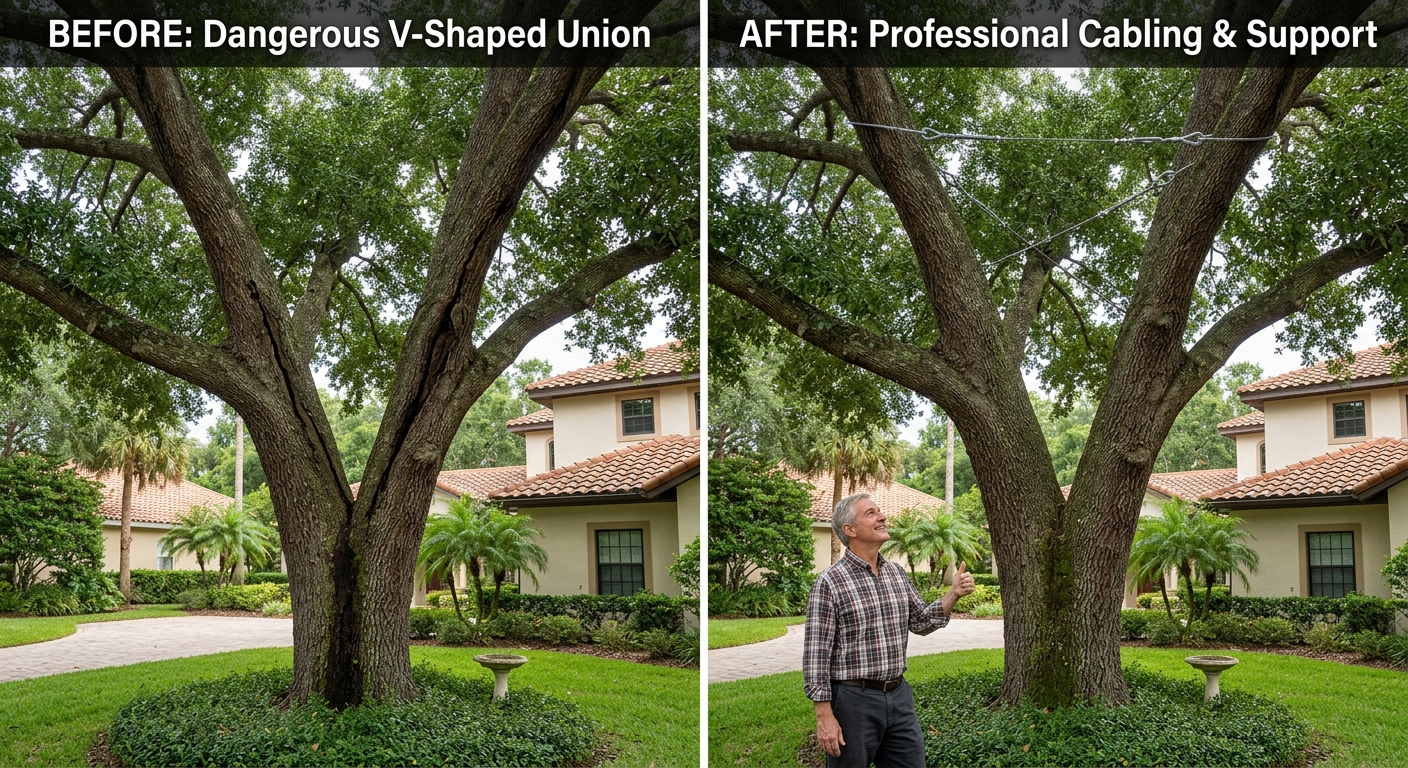
Co-dominant stems occur when two or more main stems of equal diameter grow upward from a single crotch point, creating a V-shaped union with included bark — bark trapped between the stems rather than allowing proper wood tissue connection. This is an inherently weak structure that is prone to splitting under the load of Jacksonville’s summer thunderstorms and hurricane-force winds. A properly installed cabling system above the union redistributes this stress, dramatically reducing the risk of catastrophic splitting that could take down half the tree and anything beneath it.
Our Tree Cabling Installation Process
Professional tree cabling is not a one-size-fits-all installation. Every system must be designed for the specific tree, its species, its location, the type of structural weakness present, and the load conditions it will face during Jacksonville’s storm season.
Structural Assessment by ISA-Certified Arborist
Every cabling job starts with a thorough structural assessment by our ISA-certified arborist. We evaluate the tree’s overall health and vigor, root stability, the exact nature of the structural weakness, canopy weight distribution, and wind exposure at the installation site. We use resistograph testing and visual wood decay assessment to determine whether the tree has sufficient sound wood to hold cable anchors securely. This assessment determines whether cabling is appropriate, what type of system is needed, and at what height the cables should be installed for maximum effectiveness.
High-Strength Steel Cable Installation
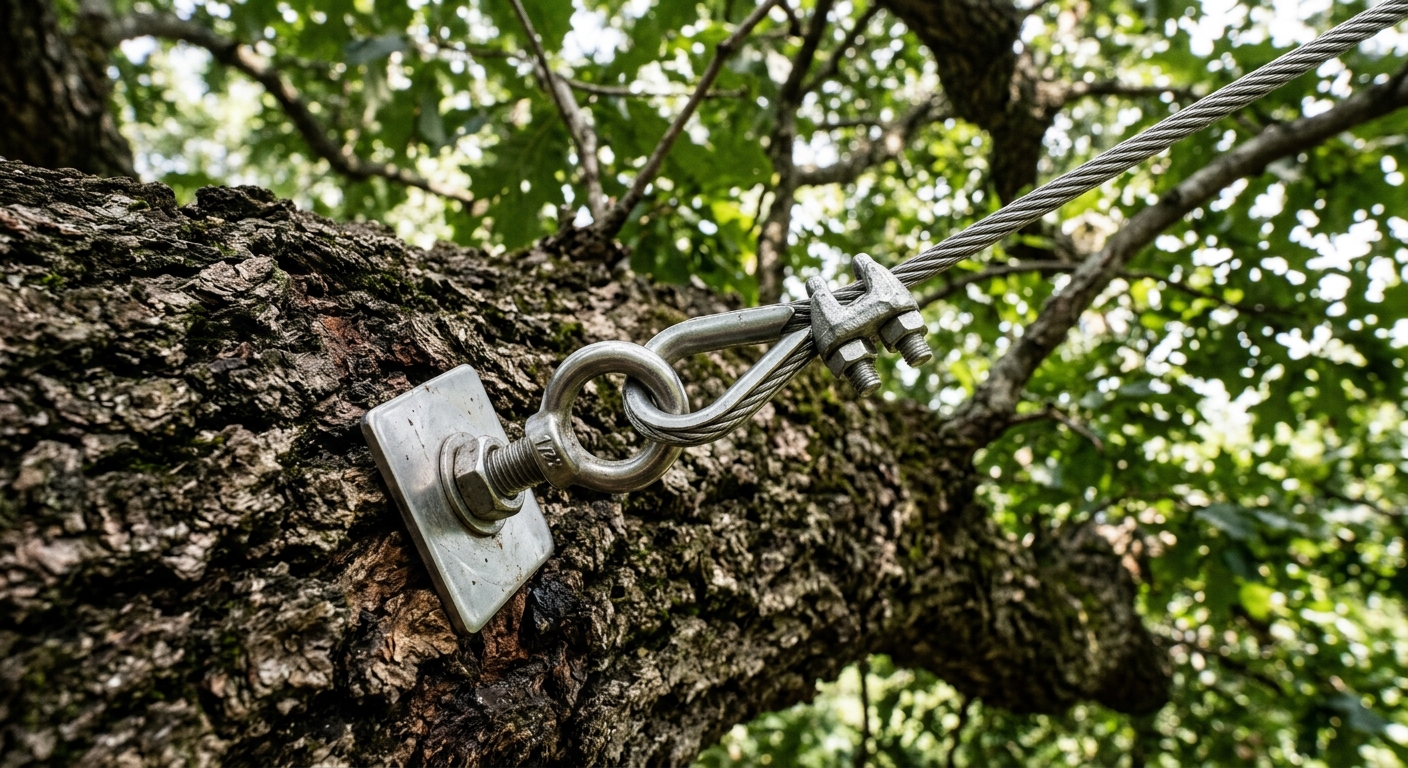
We use EHS (Extra High Strength) steel cable rated for tree support applications, installed at approximately two-thirds of the height from the weak union to the branch tips. This position maximizes leverage while minimizing unnatural stiffness in the lower canopy. Eye bolts are installed through the wood and secured with washer plates on both sides to distribute load across a broad area of wood tissue. We size the cable and hardware to the specific load requirements of each tree. All hardware is galvanized or stainless steel to resist Jacksonville’s humid, salt-air coastal environment.
Bracing Rod Installation for Splits and Cracks
When a tree has an existing crack, split, or severely included bark crotch, bracing rods complement cable systems by providing rigid support at the point of structural failure. Threaded steel rods are inserted through pre-drilled holes perpendicular to the crack or split, with large washers and nuts on both sides pulling the tree tissues together. In multi-stem situations, a series of rods may be installed at different heights to provide comprehensive structural integrity.
Follow-Up Inspection Schedule
Tree cabling systems require periodic inspection to verify that hardware remains secure, cables have not lost tension, and the tree has not grown in ways that cause the cables to become incorporated into the wood. We recommend inspection every 2 years for standard installations and every year for trees in high-wind exposure locations along Jacksonville’s coast or in open lawn areas.
Tree Bracing Services in Jacksonville
Emergency Bracing After Storm Damage
Following a severe storm event, trees that have partially failed — with major limbs split but still attached, or trunks cracked from wind torque — can sometimes be saved with immediate emergency bracing. Our team responds to these situations with the urgency required. Rapid installation of temporary or permanent bracing rods and cable support can stabilize a tree that would otherwise need immediate emergency removal, buying time for proper assessment and definitive treatment.
Deadwood Removal Combined with Cabling
Tree cabling is almost always combined with pruning to remove deadwood, crossing branches, and excess canopy weight that increases load on the structure being supported. Reducing the sail effect of a heavy lateral limb by removing inner deadwood and reducing end weight makes the cabling system more effective and reduces stress on the weak union. Our certified arborists prune according to ANSI A300 pruning standards to ensure cuts are made at the right location to promote healthy callus formation and minimize disease entry.
Tree Cabling and Bracing Cost in Jacksonville FL
Tree cabling and bracing in Jacksonville typically ranges from $400 to $1,500 per tree depending on the number of cables required, the height of installation, tree access, and whether bracing rods are needed. Large trees requiring multiple cable systems or complex multi-stem configurations may run higher. This cost is a fraction of what tree removal costs for a large, established tree — and it preserves the shade value, curb appeal, and environmental benefits of a mature tree that may have taken 50 or more years to grow.
Is Tree Cabling Worth the Cost?
A mature live oak in Jacksonville can add $10,000 to $30,000 to property value and provide thousands of dollars annually in energy savings through shade. When cabling can preserve that tree safely for another 20 to 30 years, the return on investment is substantial. A properly cabled tree that might otherwise drop a major limb on your home, your neighbor’s car, or a family member in the yard represents a liability reduction that has real dollar value beyond the aesthetics. We recommend cabling assessments for any tree showing structural vulnerabilities before the first storm season hits.
Service Areas — Tree Cabling Near Me in Jacksonville
Our tree cabling and bracing team serves all of Jacksonville and the surrounding communities including Riverside, Avondale, San Marco, Ortega, Mandarin, Southside, Arlington, Fleming Island, Orange Park, Green Cove Springs, Jacksonville Beach, Atlantic Beach, Neptune Beach, Ponte Vedra Beach, St. Augustine, Fernandina Beach, and all of Duval, St. Johns, and Clay counties.
Frequently Asked Questions
How do I know if my tree needs cabling?
Signs that your tree may benefit from cabling include: two or more main stems growing from the same point (co-dominant stems), a V-shaped crotch with dark bark trapped between stems (included bark), heavy limbs extending far from the trunk over structures, visible cracks in the trunk or major limbs, or a history of limb failure in the tree. Our free assessment will tell you definitively whether cabling is appropriate.
How long does tree cable last?
Properly installed EHS steel cable systems last 10 to 15 years before hardware replacement is recommended. Annual inspection helps identify any issues before they become failures. In Jacksonville’s salt-air coastal environment, we use galvanized or stainless steel hardware that resists corrosion better than standard hardware.
Can cabling save a damaged tree after a storm?
In many cases, yes. If a tree has sustained partial structural failure — a major stem split but still attached, or the trunk has cracked — emergency bracing combined with careful pruning can stabilize the tree and allow it to heal. Not every storm-damaged tree is a candidate, which is why a rapid assessment by our ISA-certified arborist is critical after any significant storm event in Jacksonville.
Does homeowners insurance cover tree cabling?
Tree cabling for preventive structural support is generally not covered by standard Jacksonville homeowner policies. However, emergency bracing required after a covered storm event may qualify as part of your storm damage claim. We provide detailed documentation for any insurance submissions and can advise you on how to present the claim to your adjuster.
Tree Cabling & Bracing Jacksonville FL — More Photos