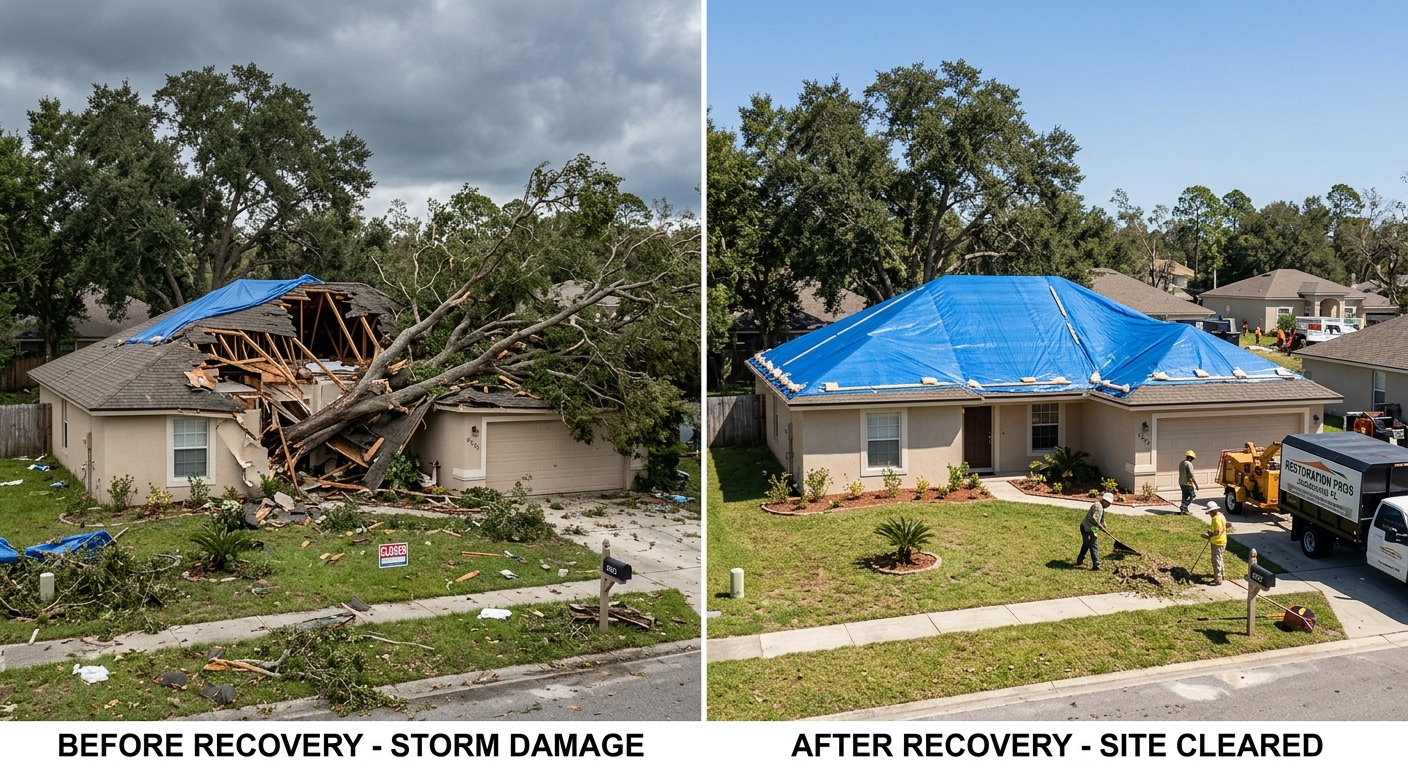
Emergency Tree Service Jacksonville FL is your lifeline when disaster strikes your property without warning. Whether a violent thunderstorm has sent a massive live oak crashing onto your roof, or you've woken to find a tree leaning dangerously toward your home after a night of heavy wind, you need a team that responds immediately and handles the crisis safely. Our certified arborists are standing by 24 hours a day to protect your family, your property, and your peace of mind across Jacksonville, Riverside, San Marco, and the surrounding Duval County area. With specialized rigging equipment, crane removal capabilities, and over 25 years of hurricane response experience, we turn chaotic tree emergencies into controlled, professional solutions—often within hours of your call.
24/7 Emergency Tree Service in Jacksonville, FL
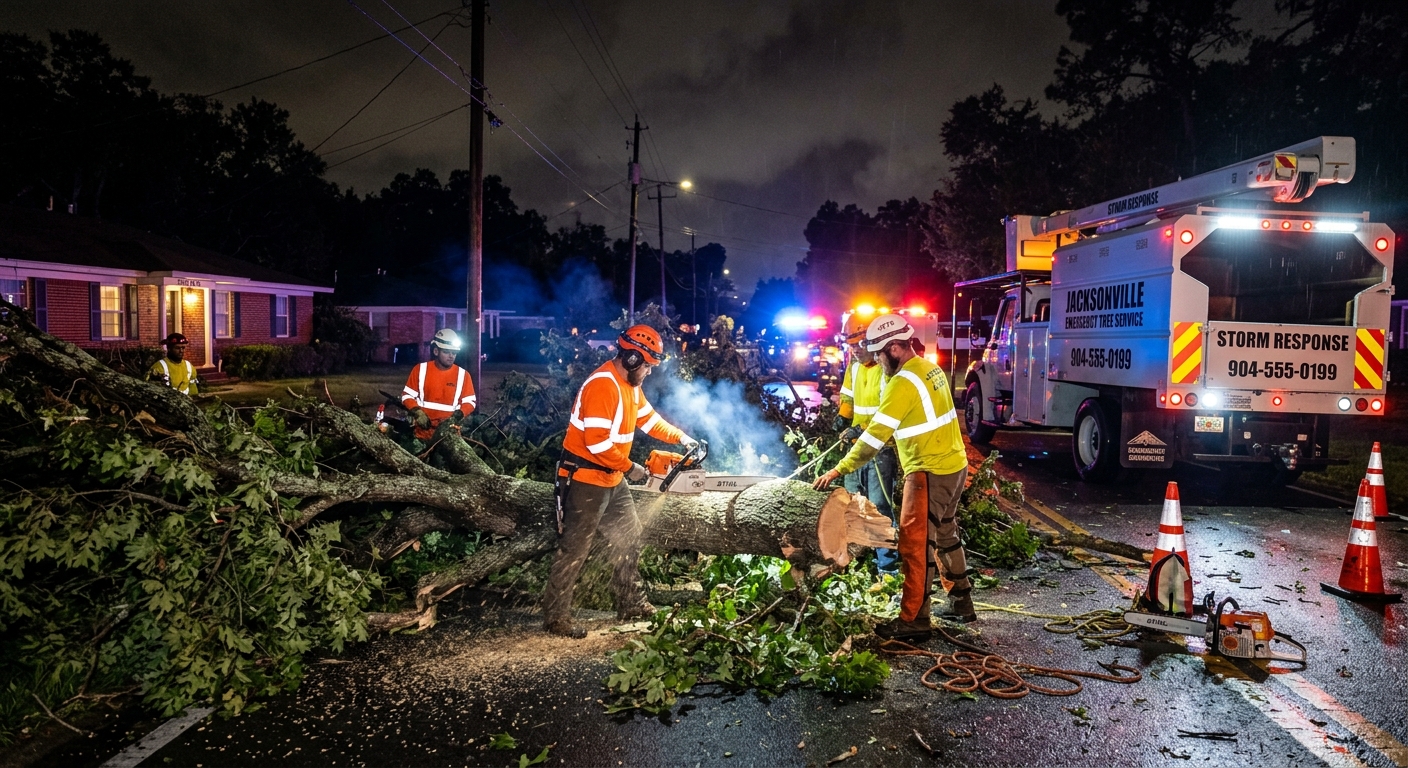
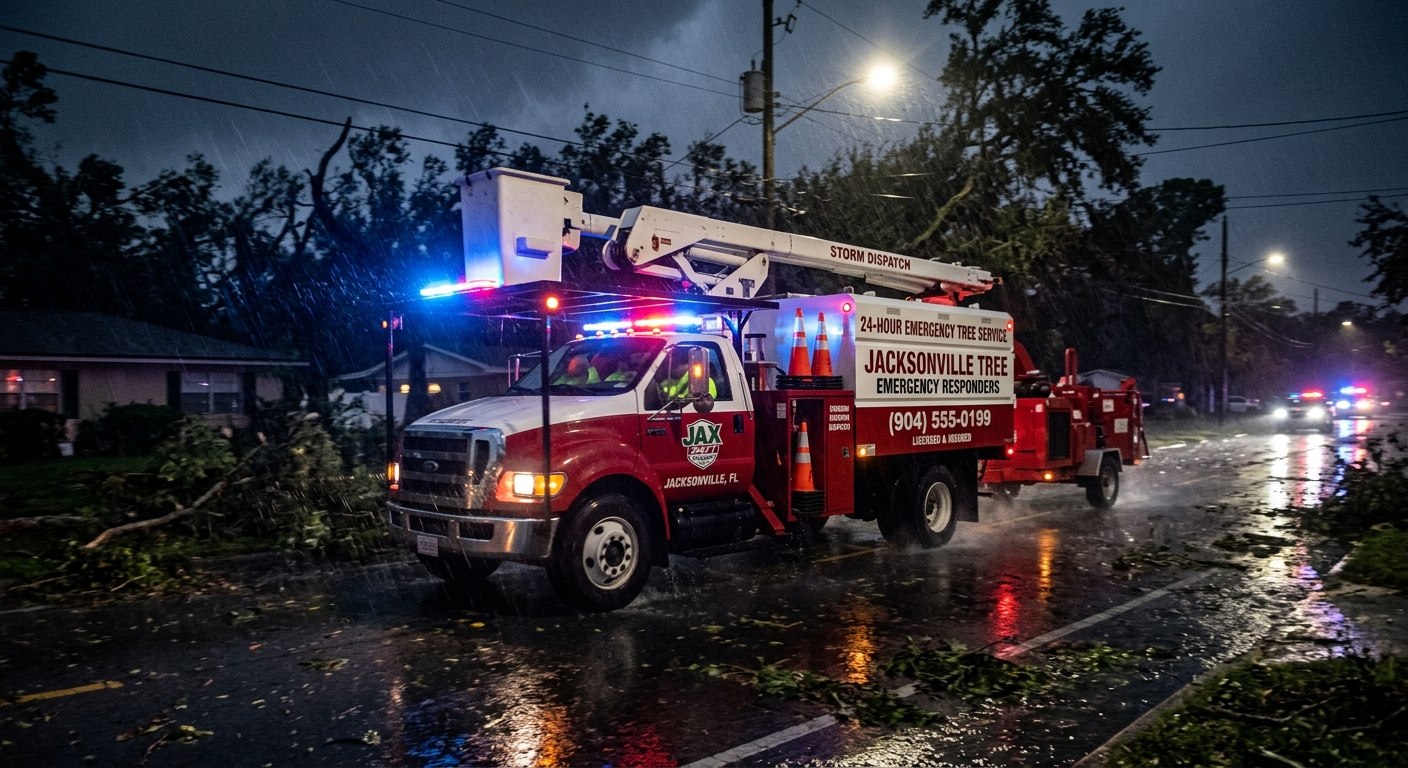
When you call for emergency tree service in Jacksonville, FL, you're not just looking for someone who can cut down a tree—you need a rapid-response team equipped to handle life-threatening situations safely and legally. Our 24/7 emergency tree service operates every single day of the year, including holidays, weekends, and the critical hours during and after hurricane events. We maintain on-call chainsaw crews, hazardous tree assessment specialists, and commercial-grade debris removal equipment specifically for these urgent scenarios.
Same-Day Response to Tree Emergencies
Our standard response time for life-threatening tree emergencies is 2–4 hours from your initial call. Life-threatening situations include trees resting on occupied structures, trees in contact with power lines, or trees blocking the only exit from your property. We prioritize based on immediate danger to human life, then property damage severity, then accessibility issues. During widespread storm events affecting multiple Jacksonville neighborhoods simultaneously, we communicate honest timelines and keep you updated every step of the way. Our dispatch system ensures no call goes unanswered, and our local knowledge of Jacksonville traffic patterns and neighborhood layouts means we reach you faster than out-of-town contractors unfamiliar with the area.
Service Available Round the Clock
True emergency tree service means answering the phone at 3 AM on a Sunday just as readily as 10 AM on a Tuesday. Our round-the-clock availability isn't just a claim—it's backed by dedicated emergency crews who work rotating shifts specifically for after-hours crisis response. You won't reach an answering service that takes a message for callback in the morning. You'll speak directly with a trained professional who can assess your situation, dispatch the appropriate equipment, and begin coordinating your emergency tree removal or stabilization immediately. This immediate connection is critical when you're dealing with the stress and potential danger of a fallen or failing tree on your Jacksonville property.
Certified Arborists Ready to Help
Every emergency response team we dispatch includes at least one ISA certified arborist trained in hazardous tree assessment and emergency tree work protocols. This isn't just about cutting—it's about evaluating structural integrity, identifying secondary hazards like damaged limbs still hanging overhead, and executing removal plans that won't cause additional property damage or injury. Our certified arborists understand Jacksonville's unique tree species, from the shallow root systems of laurel oaks to the massive spreading canopies of live oaks that require specialized rigging equipment and crane removal techniques when they fail. This expertise is the difference between a dangerous amateur job and a professional emergency tree service that protects everyone on site.
Storm Damage & Hurricane Tree Removal in Jacksonville
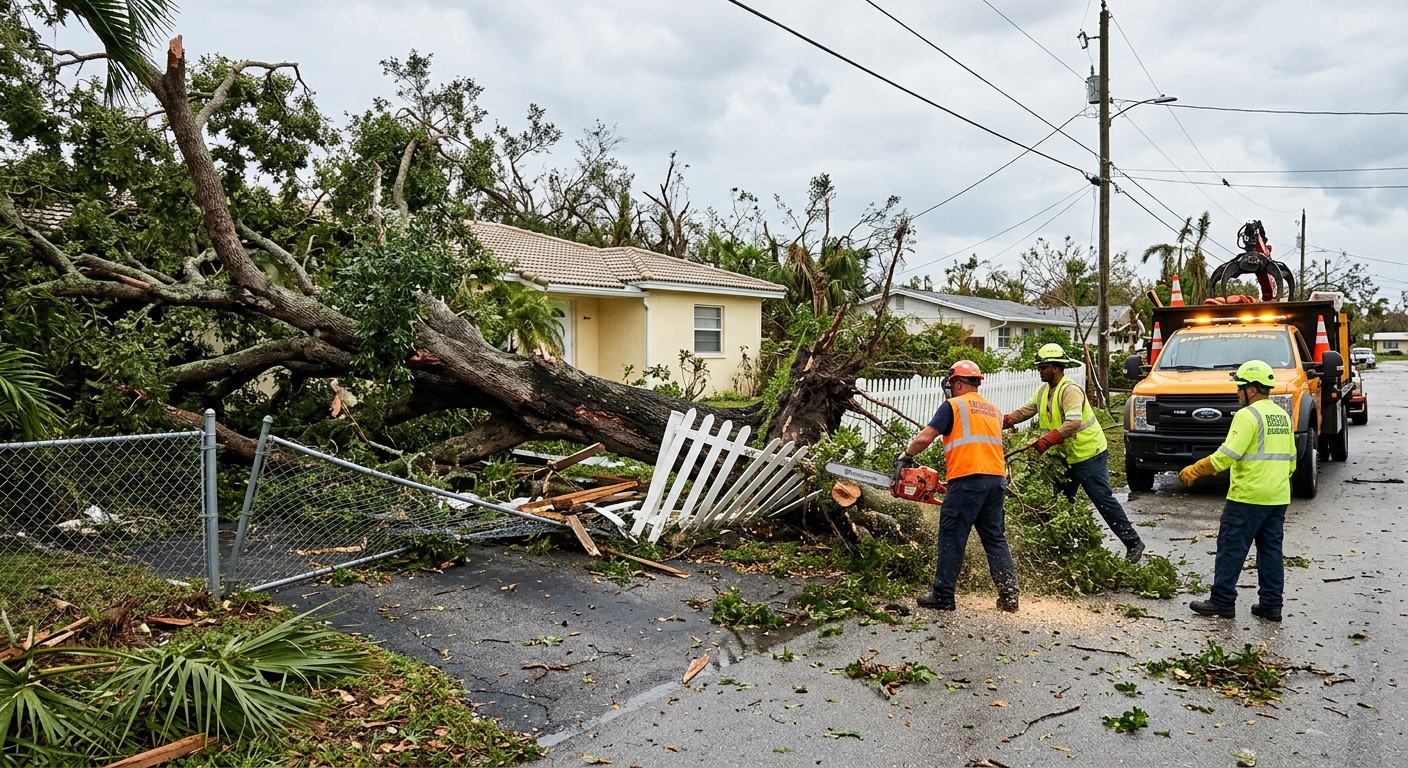
Jacksonville has weathered 89 hurricanes since 1871, and storm damage from tropical systems remains the number one cause of emergency tree removal calls in our area. Hurricane-force winds, saturated soil from heavy rainfall, and the combination of both create the perfect conditions for catastrophic tree failure. Our team has responded to every major hurricane event affecting Jacksonville in the past two decades, from Matthew in 2016 to Irma in 2017, and we understand the unique challenges of post-storm tree cleanup in coastal neighborhoods like Riverside and Avondale where flooding compounds root failure.
Post-Hurricane Tree Cleanup & Assessment
The hours and days immediately following a hurricane are critical for property protection and insurance documentation. Our post-hurricane tree cleanup service begins with a comprehensive tree hazard evaluation of your entire property, identifying not just the obvious fallen trees but also damaged trees that pose delayed failure risks—cracked trunks, partially uprooted root systems, and hanging branches weakened by wind stress. We provide written assessments with photographs that meet insurance company requirements, documenting the storm damage thoroughly before beginning debris removal. This documentation significantly improves your claim approval rate and ensures you receive fair compensation for the emergency tree service costs. Our storm cleanup crews work systematically to remove fallen trees, grind stumps below grade, and clear all debris removal from your property, leaving it safe and accessible.
Wind Damage & Fallen Tree Removal
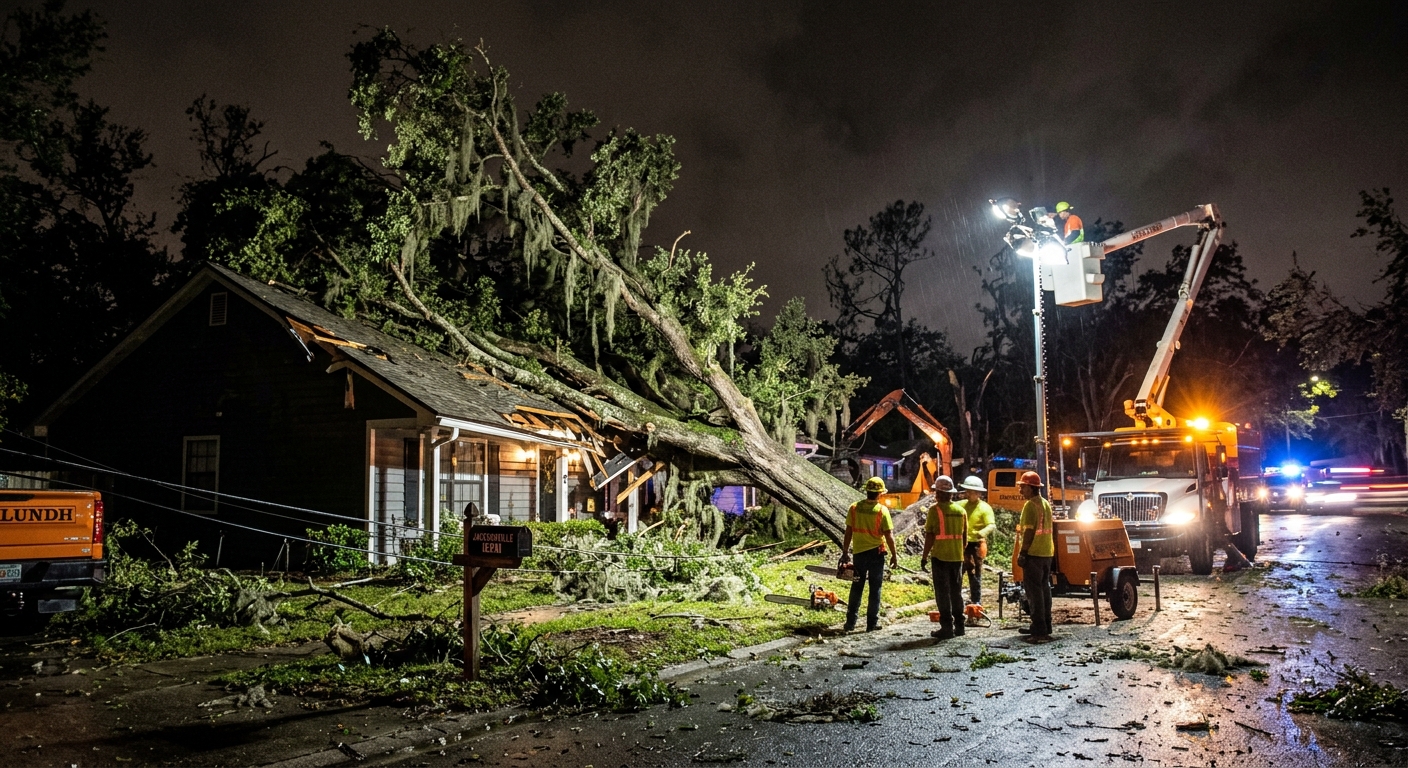
Wind damage in Jacksonville doesn't always wait for a named hurricane—severe thunderstorms and isolated tornado touchdowns can bring 60+ mph gusts that snap large limbs or topple entire trees with little warning. When a tree falls on your house during one of these sudden events, the damage often includes roof penetration, broken windows, and structural compromise that exposes your home to weather and further damage. Our emergency response protocol for fallen trees on structures includes immediate temporary stabilization using support bracing and tarping systems while we coordinate the safest removal approach. We work closely with your insurance adjuster and, when necessary, structural engineers to ensure the tree removal process doesn't worsen existing damage. Our crews are trained in controlled rigging techniques that lift heavy sections away from fragile roofing materials and siding, minimizing secondary damage during the emergency tree removal process.
Root Failure & Hazardous Tree Stabilization
Root failure accounts for 90% of emergency tree failures in Florida, often triggered when saturated soil from heavy rainfall loses its grip on root systems while wind loads the canopy. In Jacksonville's clay and sandy soils, this creates the terrifying scenario of a tree beginning to lean or partially uproot—a hazardous tree situation that can rapidly deteriorate into total failure. Our certified arborists perform immediate hazard assessments using visual inspection and specialized tools to determine whether emergency stabilization is possible or whether immediate removal is the only safe option. For trees that can be temporarily stabilized, we use cable bracing systems and support structures to prevent further movement while weather conditions improve or while you arrange scheduled removal. For trees beyond saving, we execute emergency removal using crane equipment and chainsaw crews trained in high-risk tree work, ensuring the tree comes down in a controlled manner rather than failing unpredictably onto your property or a neighbor's home.
When a Tree Falls on Your House or Car: Immediate Steps
The moment a tree crashes onto your house or car, your mind races with questions about safety, next steps, and who to call first. These situations demand calm, systematic action to protect your family and preserve your legal and financial rights. Our emergency tree service team has guided hundreds of Jacksonville property owners through this exact crisis, and we've developed a clear protocol that addresses both immediate safety and the practical steps needed for insurance claims and property protection.
Safety First: When to Evacuate vs. Shelter in Place
Your first decision after a tree falls on your house is whether to evacuate immediately or shelter in place. Evacuate immediately if you smell gas, see exposed electrical wiring, hear cracking sounds indicating further structural failure, or notice the tree is still shifting and settling. Evacuate to a neighbor's home or your vehicle parked safely away from other trees, and call 911 if there are injuries or active gas leaks. Shelter in place only if the tree has come to rest in a stable position, there are no utility hazards, and you can safely move to an interior room away from the impact zone. Never attempt to move or cut a tree that has fallen on a structure yourself—the compression and tension forces in fallen timber create unpredictable release hazards that have caused serious injuries and deaths. Call our emergency tree service line at (904) 634-3474 as soon as you've ensured everyone's immediate safety, and we'll dispatch a team to assess and secure the scene.
Emergency Documentation for Insurance Claims
Insurance companies require specific documentation to process emergency tree removal and property damage claims efficiently, and the quality of your initial documentation directly impacts your claim approval and payout timeline. Before any tree cutting begins, photograph the tree from multiple angles showing its position on your house or car, the point of impact, visible property damage, and the tree's root system if exposed. Take additional photos of the surrounding area showing storm debris, weather conditions, and any other damaged trees that help establish the storm event as the cause. Contact your insurance company's emergency claims line immediately—most major carriers have 24-hour hotlines—and obtain a claim number before authorizing any emergency tree service work. When our crew arrives, we provide a written assessment documenting the tree species, estimated size, removal complexity factors, and our professional opinion on how the failure occurred. This certified arborist assessment carries significant weight with insurance adjusters and often expedites approval for both tree removal costs and structural repairs.
Temporary Stabilization While You Wait
If our emergency response time is delayed due to high citywide demand after a major storm, or if weather conditions prevent immediate safe removal, we provide temporary stabilization services to prevent additional damage while you wait. This includes installing heavy-duty tarping systems over roof penetrations to prevent water intrusion, bracing partially failed trees with support cables to prevent further movement, and creating barriers around the hazard zone to prevent accidental contact. For trees resting on vehicles, we assess whether the vehicle can be safely extracted before full tree removal or whether the tree must be sectioned first to prevent crushing damage during the move. These stabilization measures are billable to insurance as part of emergency mitigation—the steps you're legally required to take to prevent additional damage after a covered loss. Our written documentation of all stabilization work performed protects you if your insurance company later questions whether emergency service was truly necessary or if you acted reasonably to protect your property.
Hazardous Tree Assessment & What Qualifies as an Emergency
Not every tree problem qualifies as a true emergency requiring immediate response and premium pricing. Understanding the difference helps you make informed decisions and ensures emergency crews are available for genuine life-threatening situations. Our hazardous tree assessment service helps Jacksonville property owners identify which trees pose immediate dangers and which can be addressed through scheduled removal at standard rates.
Tree Hazard Evaluation by Licensed Arborists
A professional tree hazard evaluation examines three critical factors: the tree's structural condition, the target (what could be hit if it fails), and the likelihood of failure within a specific timeframe. Our ISA certified arborists inspect for visible signs of failure including cracked or split trunks, fungal growth indicating internal decay, dead or dying branches in the canopy, root system exposure or lifting, and lean angle changes that suggest progressive root failure. We assess targets—is this hazardous tree hanging over your house, a busy sidewalk, or an empty corner of your yard? A tree with severe structural defects that could fail onto your home qualifies as an emergency. The same tree in an open area away from structures may be a priority removal but not an emergency requiring after-hours response. Our written hazard evaluation provides a clear risk rating and recommended timeline for action, giving you the information needed to make smart decisions about emergency tree service versus scheduled removal.
Power Line Contact & JEA Protocol
If a tree has fallen onto or is touching power lines, your first call must be to JEA (Jacksonville Electric Authority) at 904-665-6000, not to a tree service company. This is a critical safety protocol that Jacksonville property owners must understand: tree service companies cannot legally work on or near energized power lines until JEA has disconnected power and confirmed the lines are safe to approach. Attempting to cut or move a tree in contact with power lines yourself is often fatal—electricity can arc several feet through damp tree wood and the ground around fallen lines may be energized. After calling JEA, contact our emergency tree service line at (904) 634-3474. We'll coordinate with JEA's response timeline and dispatch our crew to arrive shortly after power disconnection is confirmed. Our chainsaw crews are trained in utility line clearance protocols and carry the liability insurance required for tree work near power infrastructure. We handle the entire coordination process, but the JEA call must come first to ensure everyone's safety and legal compliance.
Trees Blocking Roads, Driveways & Property Access
Trees blocking roads, driveways, or the only access point to your property qualify as emergency situations even if they haven't damaged structures. If you cannot safely exit your property to reach medical care, go to work, or evacuate in case of additional emergencies, that tree needs immediate removal. Our emergency response for access-blocking trees prioritizes creating a safe passage path first—we may section just enough of the tree to open a vehicle lane while leaving the remainder for complete removal during daylight hours if the situation allows. For trees blocking public roads in Jacksonville, the city's Public Works department typically handles removal on public right-of-way, but if the tree originates from your property, you're responsible for its removal and liable for any accidents it causes while blocking the road. Our emergency crews work quickly to clear these access hazards, document the emergency nature of the situation for your records, and coordinate debris removal to restore full accessibility to your property and surrounding streets.
Emergency Tree Service Costs in Jacksonville
The question every property owner asks when facing a tree emergency is "how much will this cost?"—and the honest answer is that emergency tree service costs significantly more than standard scheduled tree removal. Understanding why helps you evaluate quotes, make informed decisions, and avoid companies that exploit emergencies with truly unreasonable pricing.
Why Emergency Service Costs More (Transparent Breakdown)
Emergency tree service in Jacksonville typically costs 2-3 times the rate for the same tree removal during normal business hours, with most emergency calls ranging from $1,500 to $5,000 depending on tree size, complexity, and hazard level. This premium pricing reflects real costs: after-hours labor at premium hourly rates for chainsaw crews who work nights and weekends, immediate equipment mobilization fees to deploy crane removal equipment and specialized rigging systems on short notice, higher liability insurance costs for working in hazardous conditions with elevated injury risk, and fuel and logistics costs for rapid response dispatch. A crew responding to your home at 2 AM is earning time-and-a-half or double-time wages. The crane operator pulled away from family time commands premium rates. The certified arborist assessing structural hazards in the dark with floodlights faces dangers that don't exist in daylight tree work. These aren't artificial markups—they're the genuine cost of maintaining 24/7 emergency tree service capability in Jacksonville.
Insurance Coverage & Direct Billing Options
Most homeowner insurance policies in Florida cover emergency tree removal when the tree has damaged a covered structure like your house, garage, or fence, or when the tree blocks the only driveway access to your property. Policies typically do not cover removal of trees that fell in your yard without hitting anything, or dead trees you knew about before they fell. Standard coverage limits for tree removal range from $500 to $1,500 per tree, though many Jacksonville homeowners carry additional coverage riders that increase these limits. We work directly with all major insurance carriers and can submit claims documentation, written assessments, and invoices on your behalf. For approved claims, we offer direct billing arrangements where insurance pays their covered portion directly to us and you pay only your deductible and any amount exceeding your coverage limits. This eliminates the need for you to pay the full emergency tree service cost upfront and wait for insurance reimbursement. Our office staff guides you through the claims process and communicates with adjusters to expedite approval.
Payment Plans Available for Approved Claims
We understand that even with insurance coverage, the out-of-pocket portion of emergency tree service costs can strain household budgets already stressed by property damage and displacement. For customers with approved insurance claims, we offer payment plans that allow you to spread your deductible and any coverage-limit overages across several months rather than requiring full payment before work begins. These arrangements require a signed service agreement, proof of insurance claim filing, and approved credit, but they provide the financial flexibility to get your emergency tree situation resolved immediately while managing the cost impact. For uninsured tree emergencies or situations where insurance denies coverage, we provide written estimates before beginning work so you understand the full cost and can make informed decisions about proceeding. We never begin emergency tree work without clear pricing discussion and authorization, protecting you from surprise bills and allowing you to comparison shop if time permits.
Jacksonville's Hurricane-Ready Emergency Tree Team
What separates a professional emergency tree service from the "chuck-in-a-truck" operators who flood Jacksonville after every storm? Credentials, experience, local knowledge, and year-round commitment to the community—not just showing up when disaster creates profit opportunities.
Certified ISA Arborists & Licensed Professionals
Every crew chief on our emergency response teams holds current ISA certification as a certified arborist, the industry's gold-standard credential that requires extensive training, examination, and continuing education in tree biology, risk assessment, and safe removal techniques. Our company carries full commercial liability insurance in amounts that protect your property and our workers, as well as workers' compensation coverage that prevents you from being liable if someone is injured during emergency tree work on your property. We hold all required Florida contractor licenses and tree service permits specific to Jacksonville's municipal codes. Before hiring any emergency tree service, verify their credentials: ask for
Frequently Asked Questions
How quickly can you respond to emergency tree service calls in Jacksonville FL?
We respond to emergency tree service calls in Jacksonville within 60 to 90 minutes during business hours and typically within 2 hours for after-hours emergencies. Our crews are strategically positioned throughout Duval County to reach properties quickly when storms damage trees or they fall unexpectedly. We operate 24/7 because Jacksonville's severe weather and aging oak trees create urgent situations that cannot wait until morning.
What qualifies as an emergency tree situation in Jacksonville Florida?
Emergency tree situations include trees or large limbs that have fallen on homes, vehicles, or power lines, trees blocking roadways or driveways, storm-damaged trees threatening to fall on structures, and trees leaning dangerously after hurricanes or severe weather. In Jacksonville, our sandy soil and frequent tropical storms make trees particularly vulnerable to uprooting. If a tree poses immediate danger to people or property, it requires emergency service rather than routine scheduling.
How much does emergency tree removal cost in Jacksonville FL?
Emergency tree removal in Jacksonville typically costs $800 to $3,500 depending on tree size, location, and complexity of the situation. A small tree on a lawn costs significantly less than a large oak crashed through a roof or tangled in power lines. Emergency rates are higher than scheduled work due to after-hours crews, urgent response times, and hazardous conditions. We provide upfront quotes before starting work and work with most insurance companies for storm damage claims.
Are you licensed and insured for emergency tree work in Florida?
Yes, we maintain full licensure through the Florida Department of Agriculture and comprehensive liability and workers' compensation insurance specifically for emergency tree work. Florida law requires tree service companies to carry minimum $300,000 liability coverage, and our policy exceeds that threshold. Emergency tree removal involves significant risks, especially when trees contact power lines or structures. Our insurance protects your property, and we provide certificates of insurance to homeowners and insurance adjusters upon request.
Do you provide emergency tree service 24/7 in Jacksonville?
We provide emergency tree service 24 hours a day, 7 days a week throughout Jacksonville and surrounding areas including Mandarin, Arlington, Riverside, and the Beaches. Our emergency hotline connects you directly to dispatchers who assess your situation and send the nearest crew. Jacksonville's hurricane season and unpredictable severe weather mean tree emergencies happen at any hour. We maintain night crews and weekend staff specifically for urgent situations that cannot wait until regular business hours.
What happens during an emergency tree service call in Jacksonville?
Our crew arrives with specialized equipment to assess the hazard, establish a safety perimeter, and develop a removal strategy. We first stabilize the tree to prevent further damage, then systematically dismantle it using cranes or rigging systems when necessary. If power lines are involved, we coordinate with JEA to ensure electrical safety. After removing the tree, we clear debris from structures and pathways, though complete cleanup and stump grinding are usually scheduled separately unless you need immediate property access.
Will my homeowners insurance cover emergency tree removal in Jacksonville?
Most Jacksonville homeowners insurance policies cover emergency tree removal when storm damage or sudden tree failure damages a structure or blocks necessary access like driveways. Coverage typically ranges from $500 to $1,500 for debris removal, though policies vary significantly. Trees that fall without damaging structures are usually not covered. We document the damage with photos, provide detailed invoices formatted for insurance claims, and communicate directly with adjusters to expedite your claim process.
What is the difference between emergency tree service and regular tree removal?
Emergency tree service addresses immediate hazards requiring same-day or next-day response, while regular tree removal is scheduled days or weeks in advance for non-urgent situations. Emergency work costs 50 to 100 percent more due to urgent deployment, after-hours labor, and dangerous conditions like unstable trees or storm debris. Emergency jobs prioritize safety and hazard elimination first, with aesthetic cleanup scheduled later. Regular removal allows for better planning, lower rates, and comprehensive site cleanup all completed in one visit.
Emergency Tree Service Jacksonville FL